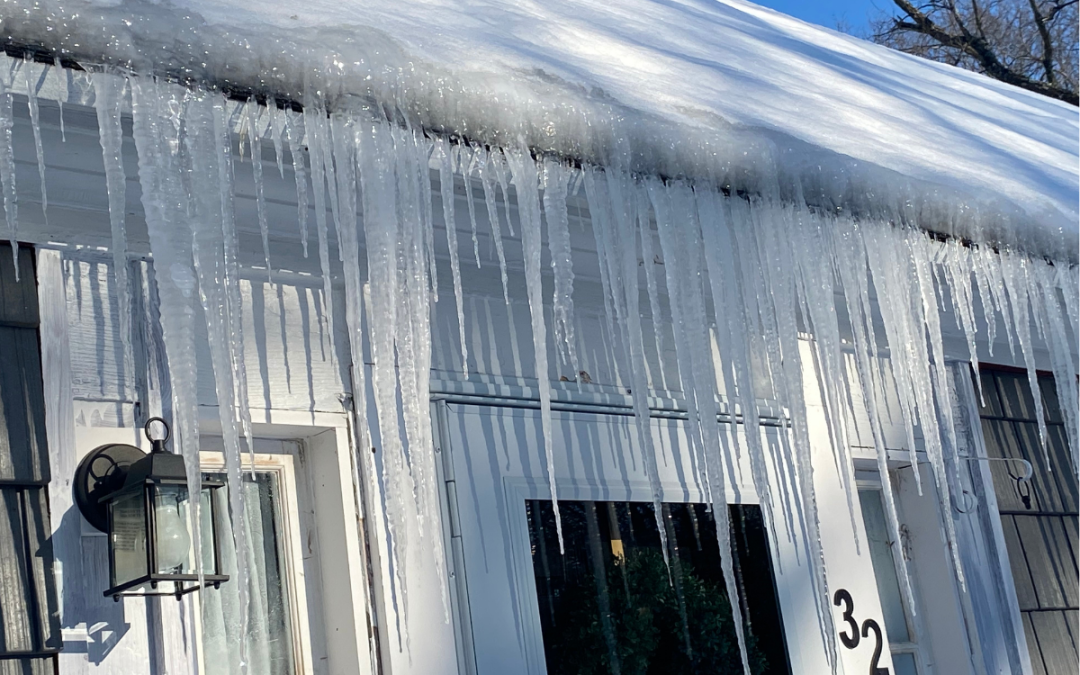
Winter in New England brings heavy snow, fluctuating temperatures, and freeze–thaw cycles that can be tough on your home. One of the most common and damaging winter issues we see is ice dams. Understanding what causes them and how to prevent them can save you from costly repairs and interior water damage.
What Is an Ice Dam?
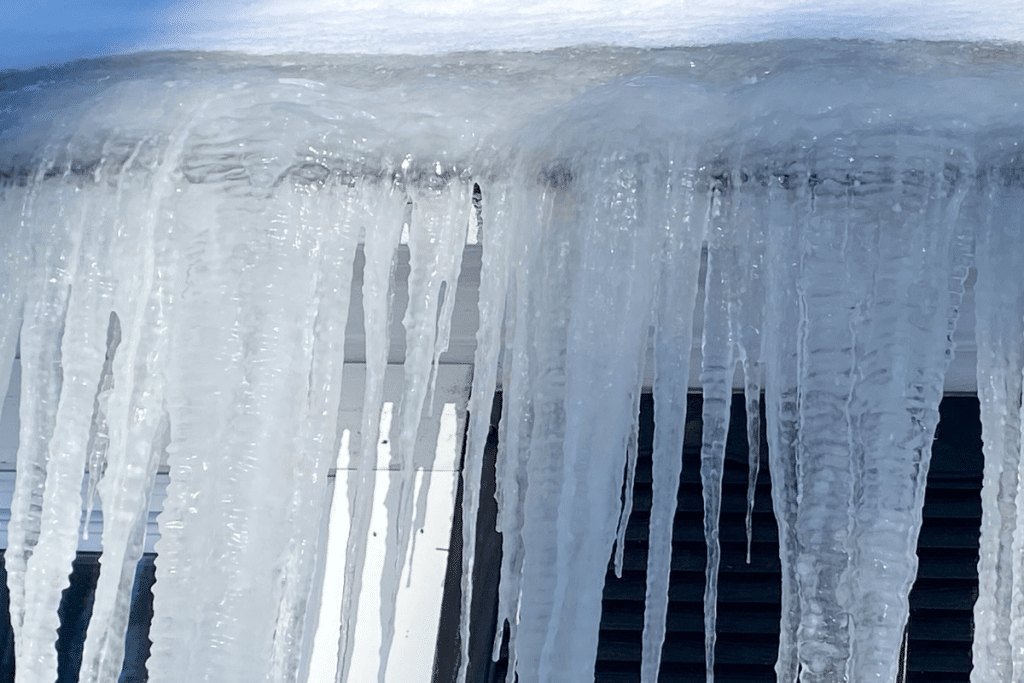
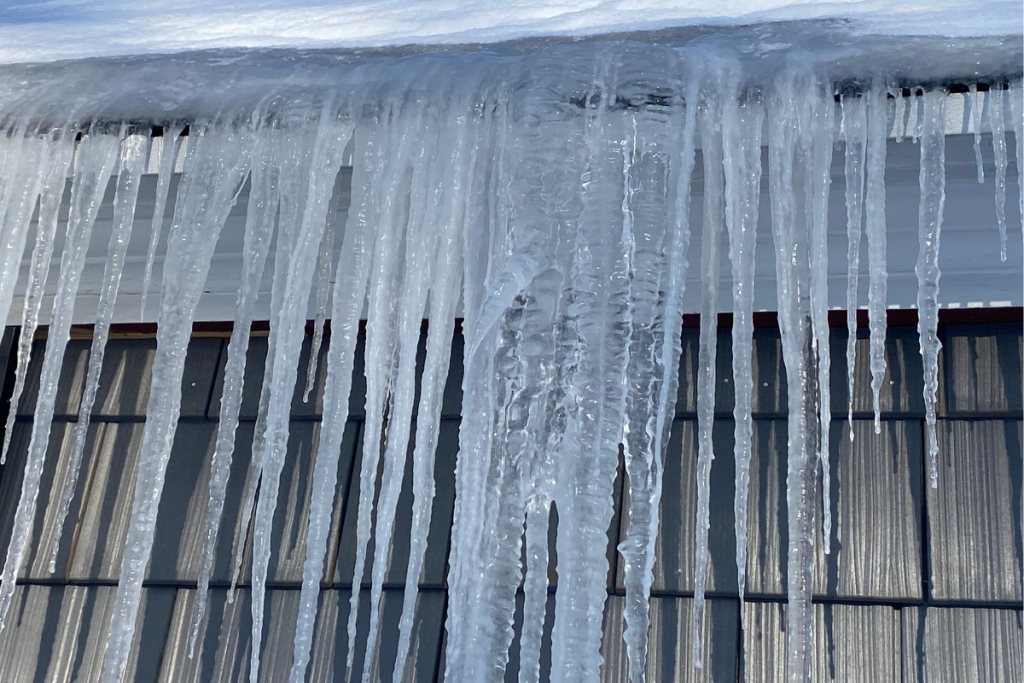
An ice dam forms when heat escapes from your home and warms the roof, causing snow to melt. As the melted water runs down toward the colder eaves, it refreezes and creates a ridge of ice. This ridge traps additional water behind it, forcing moisture under shingles and into the roof system. The result can be:
- Roof leaks
- Damaged insulation
- Stained ceilings and walls
- Mold growth
- Premature shingle failure
How to Reduce the Risk of Ice Dams
The key to prevention is keeping your roof surface cold and maintaining proper drainage. Here are the most effective steps:
- Improve Attic Insulation
A well-insulated attic prevents heat from escaping and warming the roof deck. - Seal Air Leaks
Gaps around recessed lights, attic hatches, plumbing vents, and chimneys allow warm air to rise and melt snow unevenly. - Enhance Ventilation
Balanced soffit and ridge ventilation helps regulate attic temperature and reduce warm spots on the roof. - Keep Gutters Clear
Clogged gutters can worsen ice buildup and prevent proper drainage. - Safe Snow Removal
Removing excess snow from the lower sections of the roof can limit the amount of meltwater that can refreeze at the eaves.
The Root Cause of Ice Dams
The root cause of ice dams is almost always uneven roof temperature caused by heat loss from the house. In building-science terms, it’s a failure of the thermal and air barrier at the attic/roof interface. The most common underlying causes are:
- Inadequate Attic Insulation
Warm interior air rises and escapes through poorly insulated ceilings, warming the roof deck and melting snow from below. - Air Leakage Into the Attic
Gaps around:- Recessed lights
- Bath fans
- Chimney chases
- Attic hatches
- Plumbing and electrical penetrations
allow heat to bypass insulation and create hot spots on the roof.
- Poor Attic Ventilation
Without proper soffit-to-ridge airflow, warm air becomes trapped in the attic, raising roof temperature and accelerating melt/refreeze cycles. - Roof Geometry & Shading
- Complex rooflines (valleys, dormers, low slopes)
- North-facing sections that stay colder
create ideal refreezing zones at the eaves.
- Blocked or Improper Gutters
Ice buildup in clogged gutters prevents meltwater from draining, worsening backup under shingles. - High Indoor Humidity & Heat Load
Older New England homes often leak significant heat upward due to:- Stack effect
- Balloon framing
- Unsealed top plates
In short:
Ice dams are not a roof problem — they are a building envelope problem.
They indicate heat is escaping into the attic, melting snow, and refreezing at the cold overhangs. The permanent fix is air sealing, insulation, and ventilation—not just removing the ice.
How We Can Help
At N.E. Building & Restoration, we see firsthand how destructive ice dams can be to New England homes. Our team can:
- Inspect your roof and attic for insulation, ventilation, and air-sealing issues
- Repair damage caused by ice dams, including roofing, flashing, siding, and interior finishes
- Install proper ventilation systems and insulation upgrades
- Improve gutter systems and drainage
- Provide long-term solutions to prevent recurring winter problems
Ice dams are more than just an inconvenience—they are a sign that your home’s building envelope needs attention. Addressing the root cause now can prevent leaks, structural damage, and expensive emergency repairs later.
If you’re dealing with ice dams or want to make sure your home is prepared for the next New England winter, contact our team for a professional evaluation. We’re here to protect your home and keep it performing the way it should, season after season.